Prostate cancer begins in the prostate, a small gland beneath the bladder that produces seminal fluid. For many men it is a slow-growing disease that may never cause symptoms; for others it can spread (metastasize) beyond the prostate and become life-threatening. Because outcomes and treatment choices vary widely, clear patient education about how prostate cancer behaves, what to watch for, and how modern therapies fit into care is essential.
Early signs and symptoms
Early-stage prostate cancer often produces no symptoms and is commonly found through screening tests or incidentally during examinations. When symptoms do appear, they usually involve urinary changes that can be mistaken for benign conditions such as an enlarged prostate (BPH). Common early complaints include a weak urine stream, urgency or frequency (especially at night), difficulty starting or stopping urination, and occasional blood in the urine or semen. Because these signs overlap with noncancerous problems, medical evaluation is needed rather than self-diagnosis.
Symptoms of advanced or metastatic prostate cancer
When prostate cancer advances and spreads beyond the prostate, symptoms may reflect the affected site. Bone is the most common site of spread; patients may develop persistent pain in the back, hips, or pelvis, unexplained weight loss, fatigue, and in some cases neurologic symptoms if there is spinal cord compression. Advanced disease can also cause more pronounced urinary obstruction, blood in the urine, or loss of bladder or bowel control in severe situations. Prompt assessment is important when new systemic symptoms or persistent pain occur.
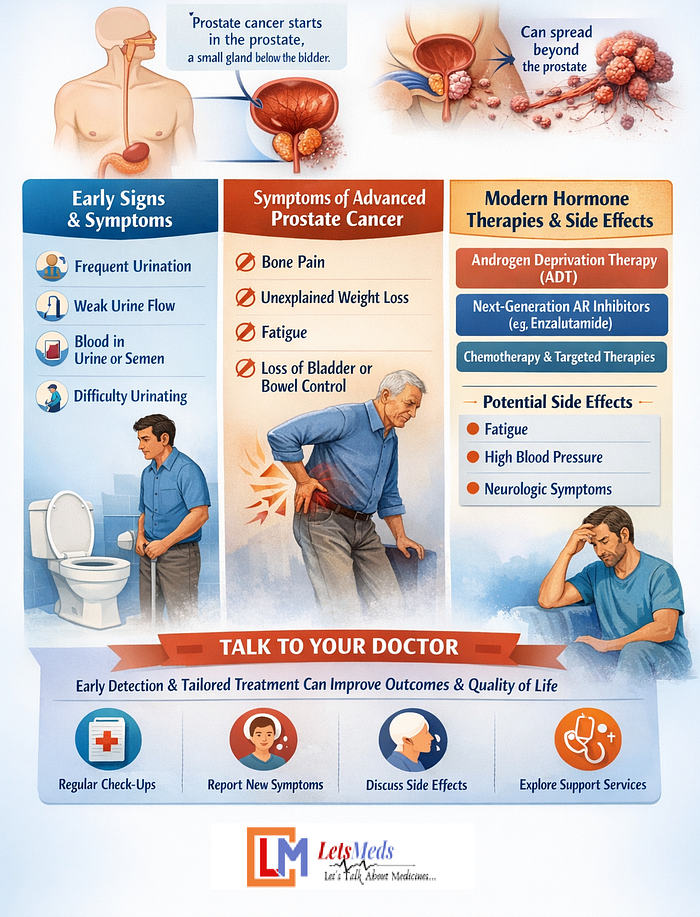
How prostate cancer progresses
Prostate cancer progression depends on tumor biology and how early it’s detected. Some tumors remain localized for years; others become castration-resistant (continue to grow despite low testosterone) or develop into metastatic disease. Clinicians stage the cancer and use biomarkers (like PSA), imaging, and biopsy results to guide prognosis and treatment planning. The pathway from localized to metastatic disease can be slowed or modified by effective treatments, which is why early detection and tailored therapy matter.
Treatment approaches for advanced or metastatic disease
Treatment choices for advanced prostate cancer are individualized and may include one or more of the following:
- Androgen-deprivation therapy (ADT): lowering testosterone to slow tumor growth (medical castration with injections or surgical orchiectomy).
- Second-generation androgen-receptor pathway inhibitors: oral agents that block the androgen receptor more completely than older drugs.
- Chemotherapy: used in some metastatic settings to reduce tumor burden.
- Targeted and radioligand therapies: newer options in certain patients (based on molecular testing and availability).
The goal in advanced disease balances extending life, controlling symptoms, and preserving quality of life. Multidisciplinary care (medical oncology, urology, radiation oncology, palliative care) helps tailor this balance.
The role of modern hormone-based therapies in quality of life
Modern hormone-based therapies — sometimes called next-generation androgen receptor inhibitors — have changed the outlook for many men with advanced prostate cancer. These agents can delay disease progression, reduce cancer-related symptoms (such as bone pain), and in many trials have improved overall survival or metastasis-free survival depending on the clinical setting. Importantly, by controlling disease activity they often help patients maintain everyday function and relieve treatment-related symptoms, although they have their own side-effect profiles that require monitoring.
About Enzalutamide (where it fits)
Enzalutamide is one of the commonly prescribed second-generation androgen-receptor inhibitors used under medical supervision for several prostate cancer settings, including castration-resistant and some earlier metastatic contexts. The usual adult dose is 160 mg taken once daily (commonly given as four 40 mg capsules or equivalent), and dosing should be supervised and adjusted by a specialist. Like all systemic therapies, enzalutamide may cause side effects such as fatigue, hypertension, and, less commonly, neurologic events — patients should discuss risks and benefits with their treating physician.
If you are comparing costs or searching for “enzalutamide 160 mg price,” remember that Enzalutamide price varies widely by country, whether the product is a brand or a generic, local reimbursement rules, and whether treatment is covered by insurance or government programs. Treatment decisions depend on a doctor’s advice, and results vary from patient to patient.
A caregiver’s perspective on access
“A few months after my father’s diagnosis we struggled to find an affordable supplier that could ship to our city. We learned about LetsMeds as a medicine-access provider that helped connect us with options available in the Philippines (Manila, Cebu, Davao, Quezon City, Makati) and also offered international delivery. That access didn’t replace medical advice, but it made researching treatment affordability easier for our family.” — caregiver testimonial (shared to illustrate access challenges; not a medical endorsement).
Living with advanced prostate cancer: practical notes
- Keep regular appointments and report new symptoms quickly.
- Discuss side-effect prevention and management proactively (bone health, cardiovascular monitoring, fatigue).
- Ask your team whether genetic or molecular testing is appropriate — that can open options to targeted or radioligand therapies.
- Explore supportive services (pain management, nutrition, mental health) to preserve quality of life.

Conclusion
Prostate cancer ranges from indolent to aggressive disease. Awareness of early signs, understanding how the disease can progress, and knowing the role of modern hormone-based therapies can help patients and families make informed decisions with their clinicians. Always remember: treatment decisions depend on a doctor’s advice, results vary from patient to patient, and early diagnosis plus specialist care usually gives the best chance to preserve quality of life and benefit from available treatments. Access to affordable treatment options varies by country and provider, so discuss choices openly with your care team and trusted access channels.